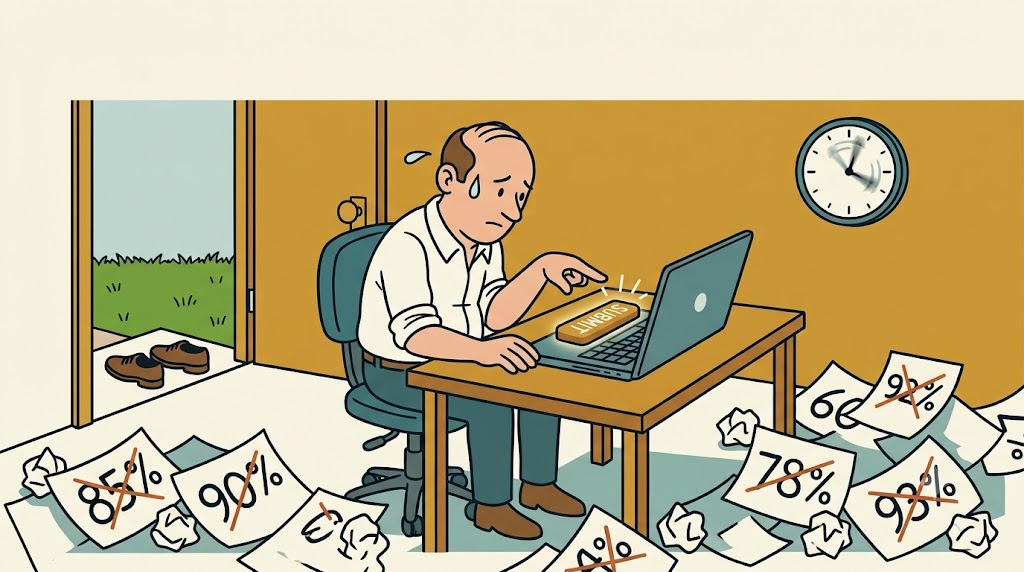
You knew before you admitted it. Three months ago, maybe six. Something in the numbers didn’t add up and you closed the app instead of opening it. That’s not laziness. That’s a decision, made quietly, to not look.
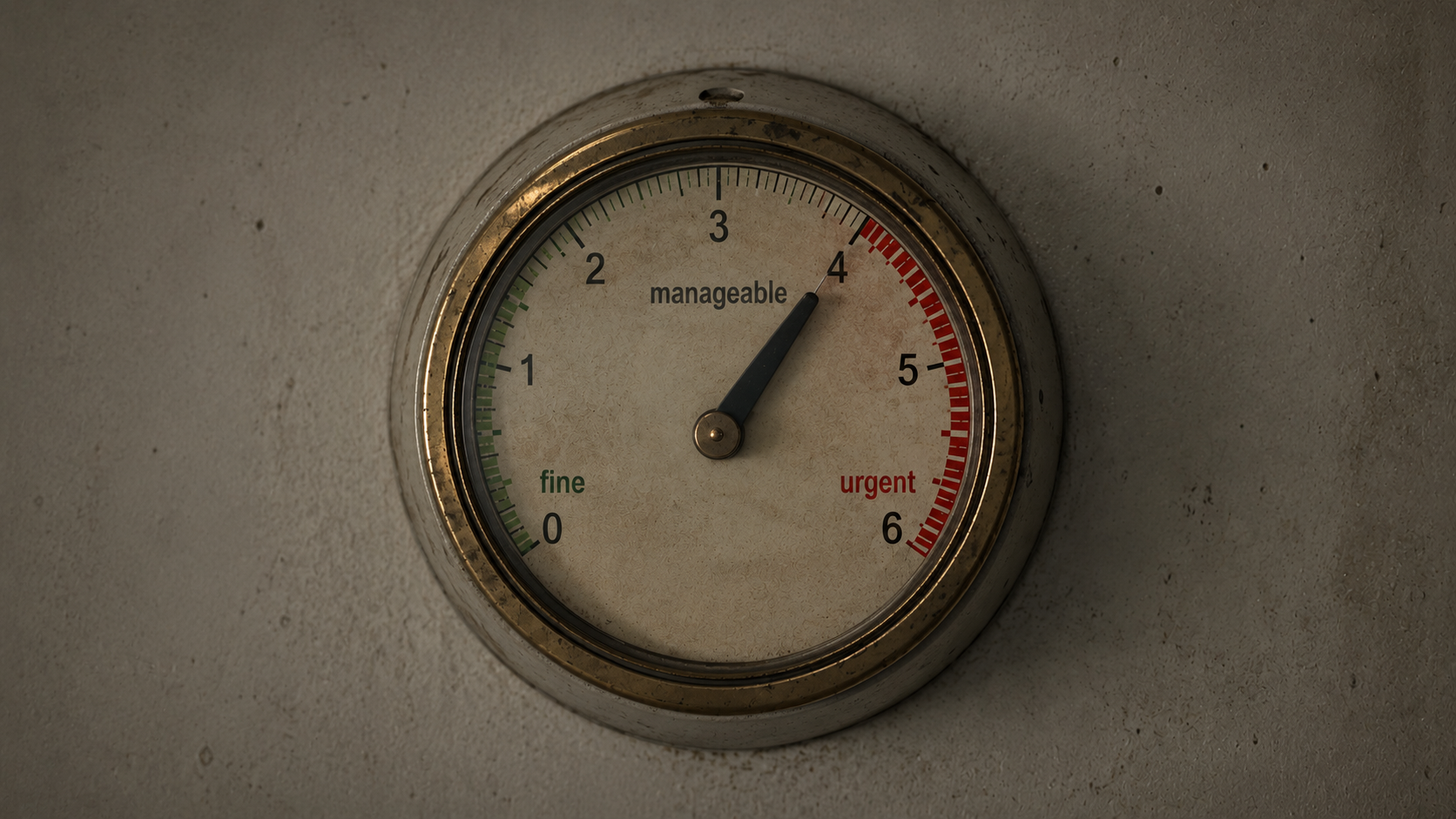
Everyone has a financial thermostat. It’s the point at which your own situation stops feeling manageable and starts feeling like a problem you have to act on. The trouble is, that setting is different for everyone, and it’s rarely set at the moment the problem actually starts. It’s set later, once the discomfort gets loud enough to override the habit of not looking.
So by the time most people admit they need extra income, they’re not starting from a calm place. They’re starting from behind, and behind doesn’t think clearly.
What “not looking” turns into
Head-in-the-sand rarely stays head-in-the-sand. It usually curdles into one of a few things:
- A second job, also poorly paid, because it’s the fastest thing to say yes to
- Spending money you don’t have on a course or piece of kit that promises to fix it
- Selling something of real value to buy a few months of breathing room
- Hours spent watching people online who make it look effortless, because that feels better than facing your own numbers
None of these are stupid. They’re what a stressed brain reaches for when it wants relief now more than it wants a solution later. The problem is that relief and solution aren’t the same thing, and mixing them up is how people end up further behind than when they started.
Why “easy” and “hard” both get it wrong
Here’s the bit that doesn’t get said enough. There is no legitimate income opportunity that doesn’t require real competence, real effort, and some luck. Even the people who look like they’re earning money for nothing are leveraging a skill, they’ve just usually got good at hiding the work behind it.
So if you’re currently hoping there’s an easy version of this, there isn’t, and chasing one is exactly how people end up in the “spend money to fix it” trap above. But the opposite mistake is just as common. People who correctly clock that it won’t be easy often don’t realise how much harder it actually is than they’ve braced for, and they underestimate the mismatch between the effort and the return in the early months. Both versions of wrong lead to giving up, just at different points.
One thing to do today
Before you pick anything, write down every option you’re actually considering, however unlikely. Next to each one, answer honestly:
Is this solving the problem, or is it just buying me a few months of feeling better?
That single question filters out most of the second-job, course-buying, possession-selling instinct without you having to fight it head on. It doesn’t tell you what to choose. It tells you which of your current options are relief dressed up as a plan.
What’s still unresolved
That question gets you as far as knowing what to rule out. It doesn’t tell you how to score what’s left against cost, against whether you’d actually stick with it when the initial motivation wears off, or against which option is genuinely capable of pulling you all the way through the situation rather than just holding it steady. That’s a longer piece of work, and it’s the difference between picking something and picking something that lasts.
That’s the part we work through properly inside Income Rebellion on Skool.